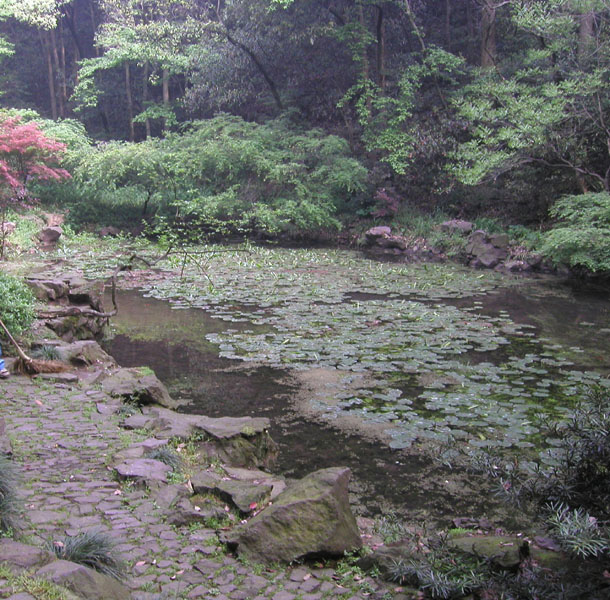
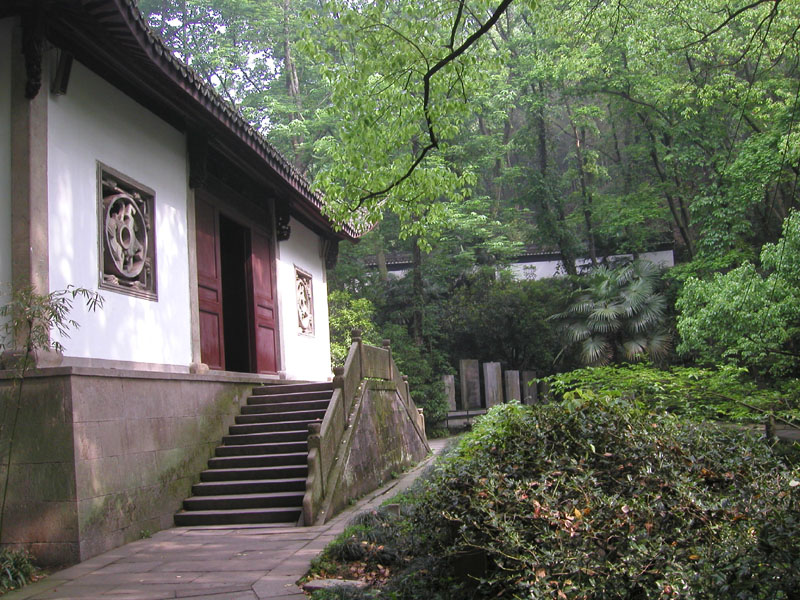
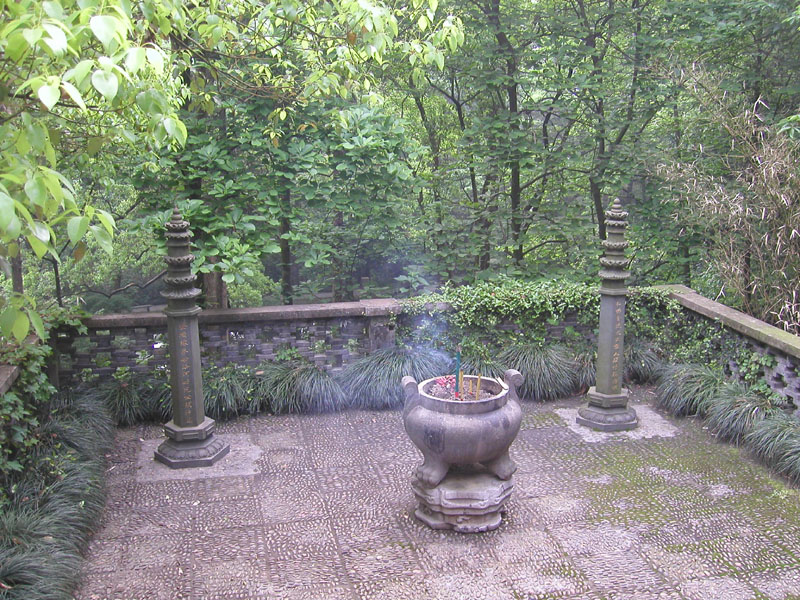
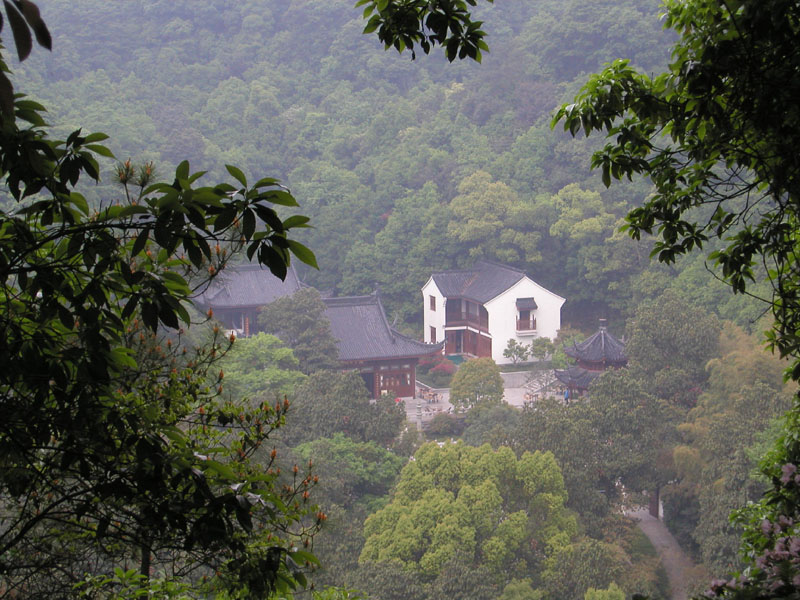
The photos were taken during a visit to CMS, Zhejiang University, in
the spring of 2005. They are grouped according to the
Hangzhou walks.
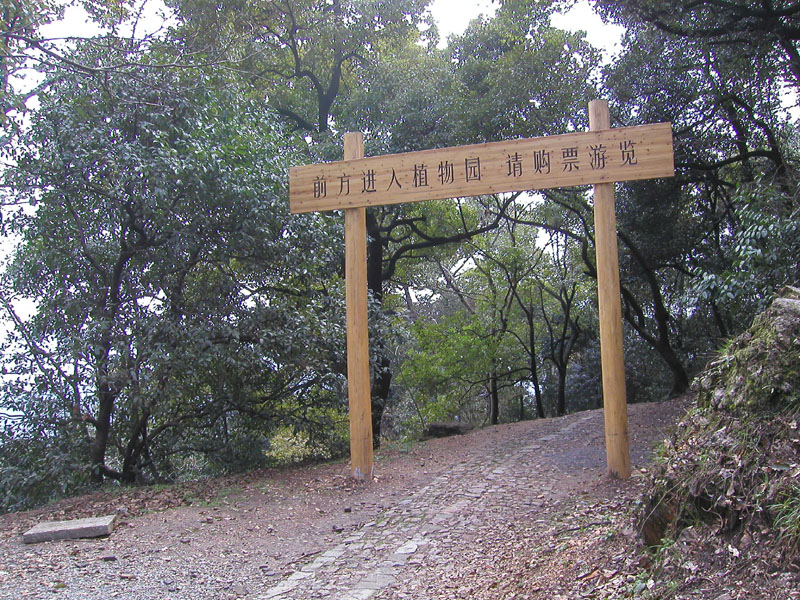
Botanical Gardens
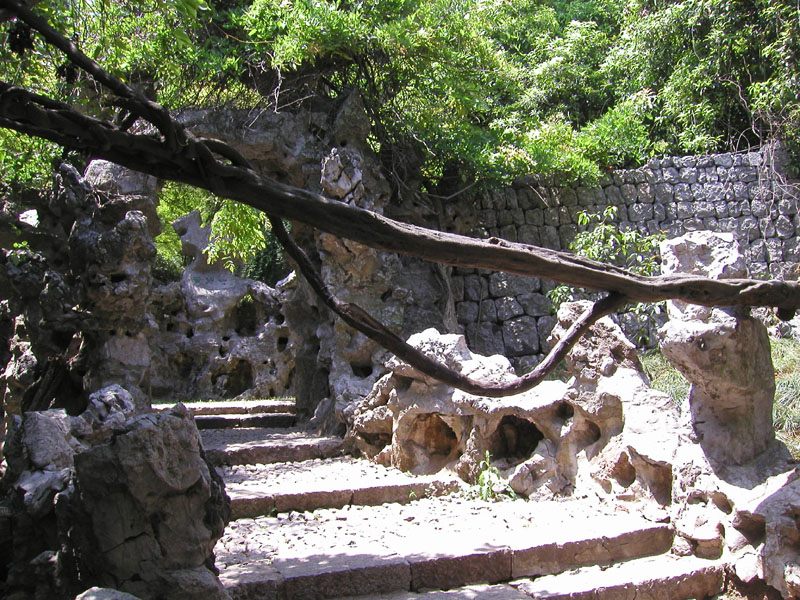
The Botanical Gardens are next to the University.
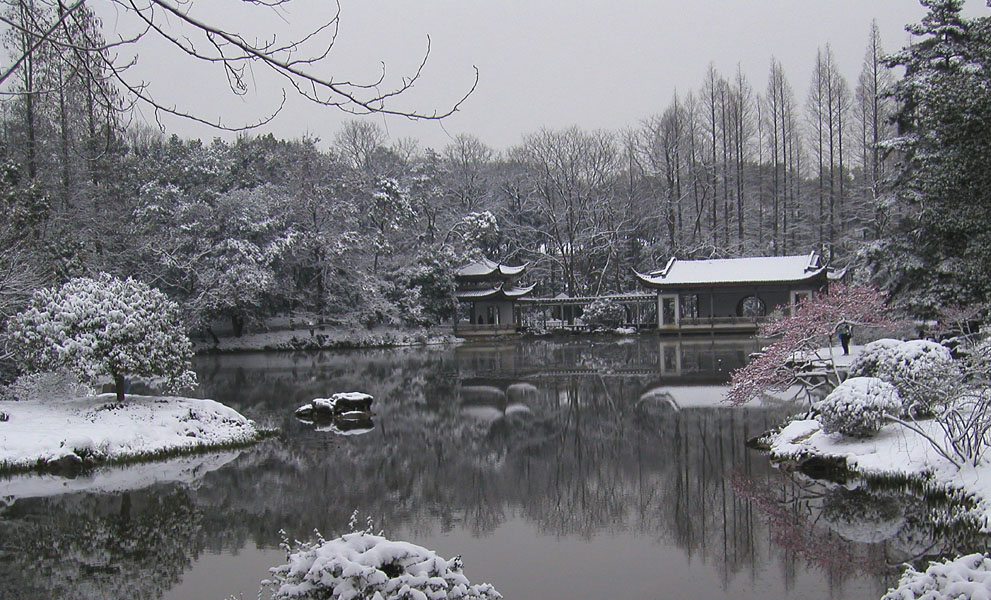
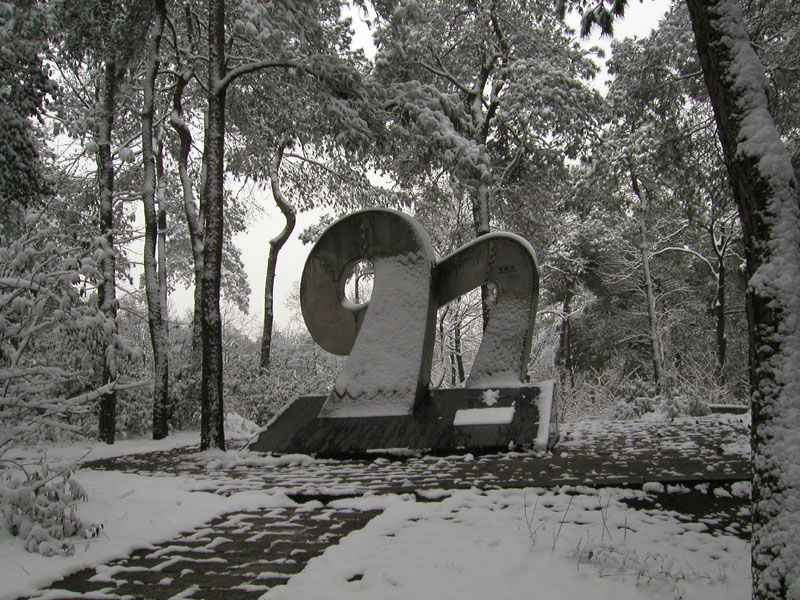
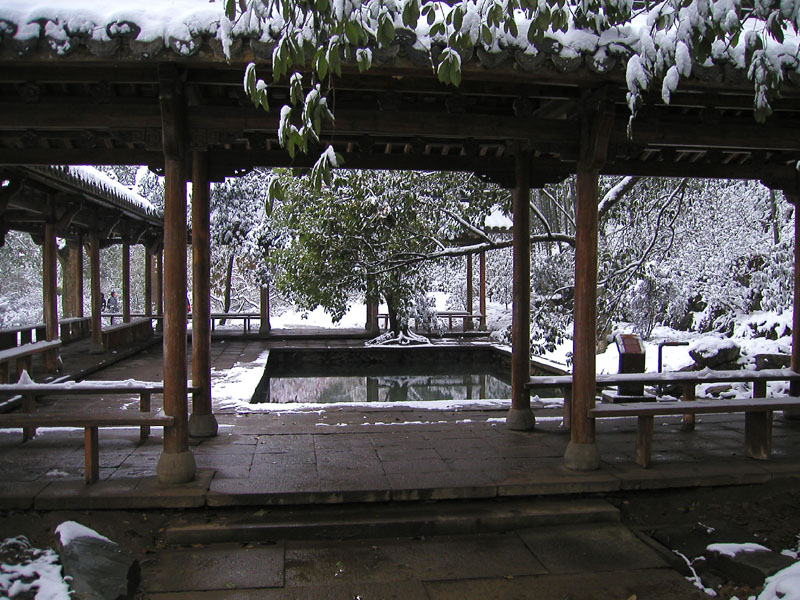
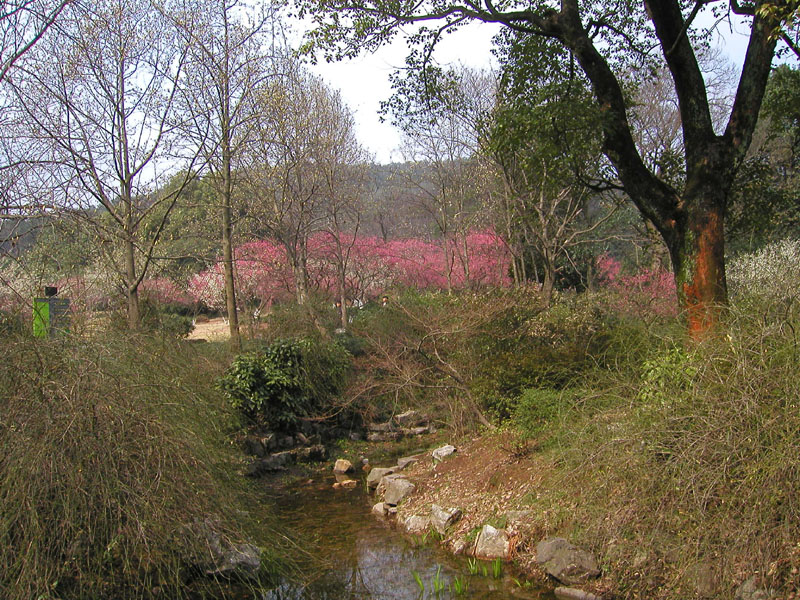
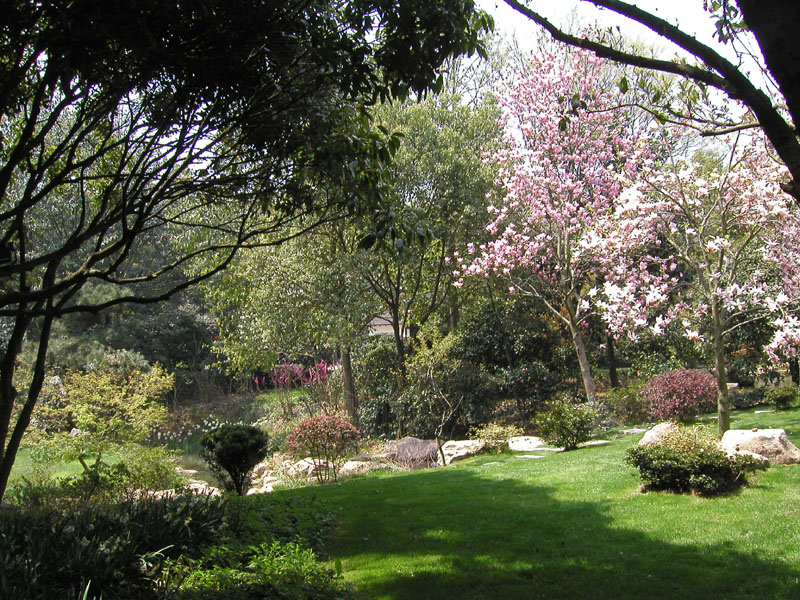
Botanical Gardens: after a late snowfall.Botanical Gardens: after a late snowfall.Botanical Gardens: after a late snowfall.Botanical Gardens.
Northern Peak
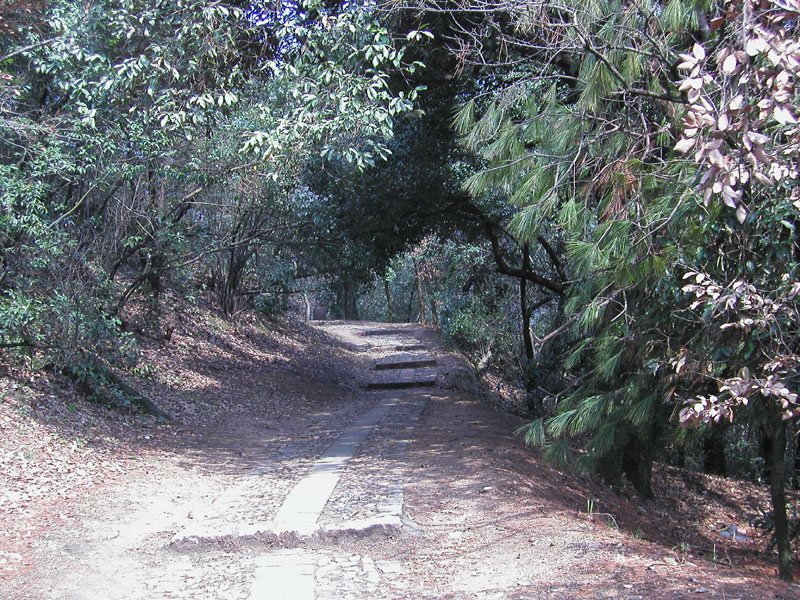
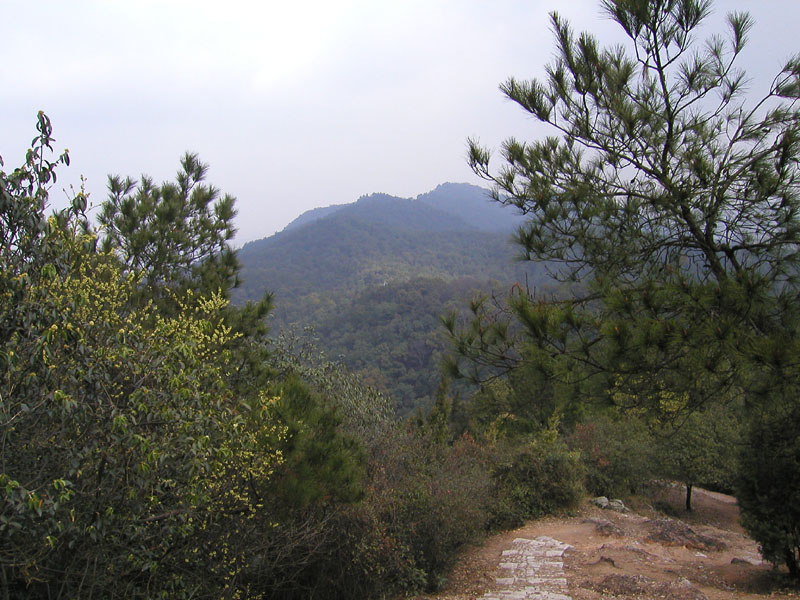
It is possible to follow the ridge behind the University all the way to the top of Northern Peak.
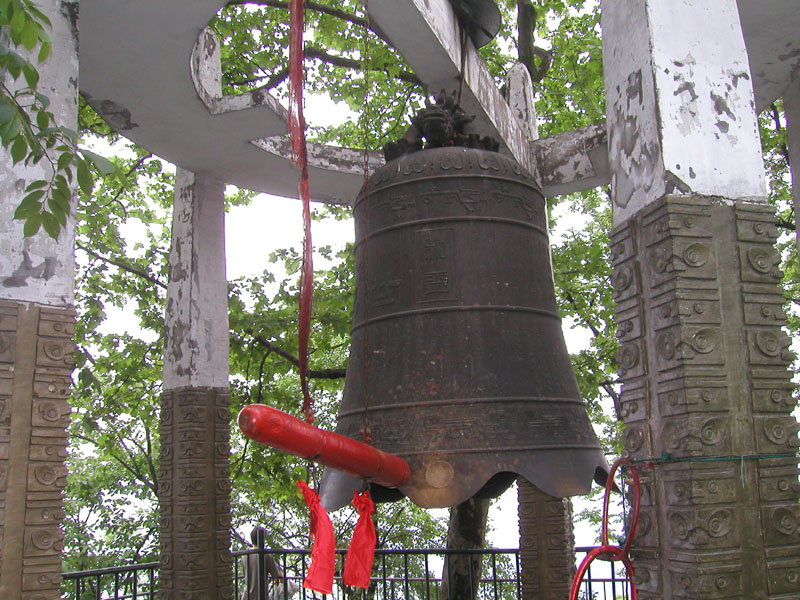
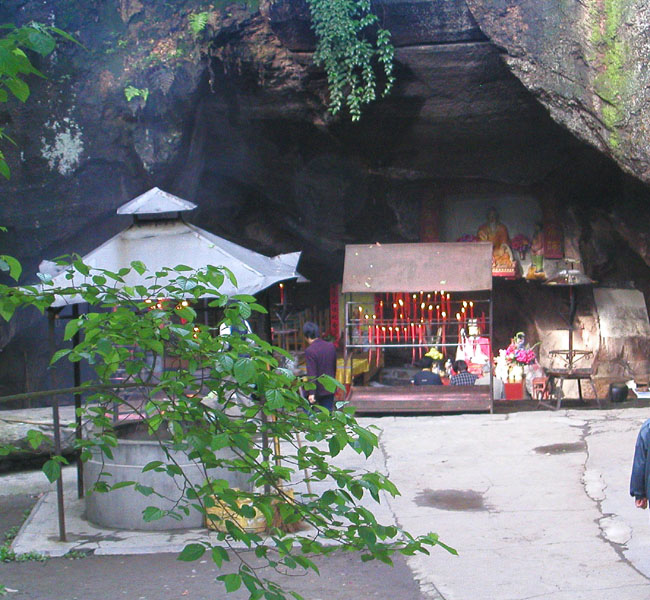
Northern Peak: the path along the ridge.Northern Peak: the path down to the botanical gardensNorthern Peak: view along the ridge to the peak.Northern Peak: on top there are communication towers, a cable car station and restaurants, and an active Buddhist temple.Northern Peak: Buddha seems happy, despite the clutter.Northern Peak: the bell on topNorthern Peak: There is little room for cemeteries in this part of China, but one sometimes comes across graves among the trees.
West Lake
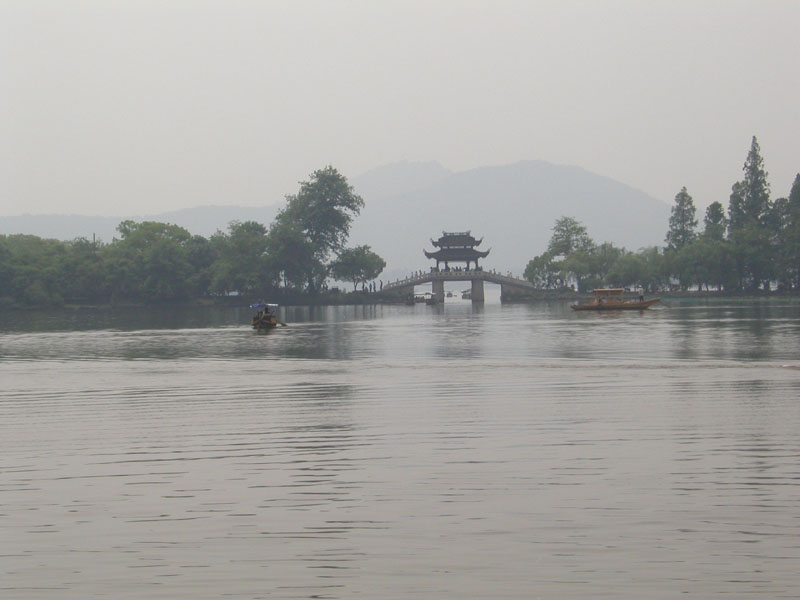
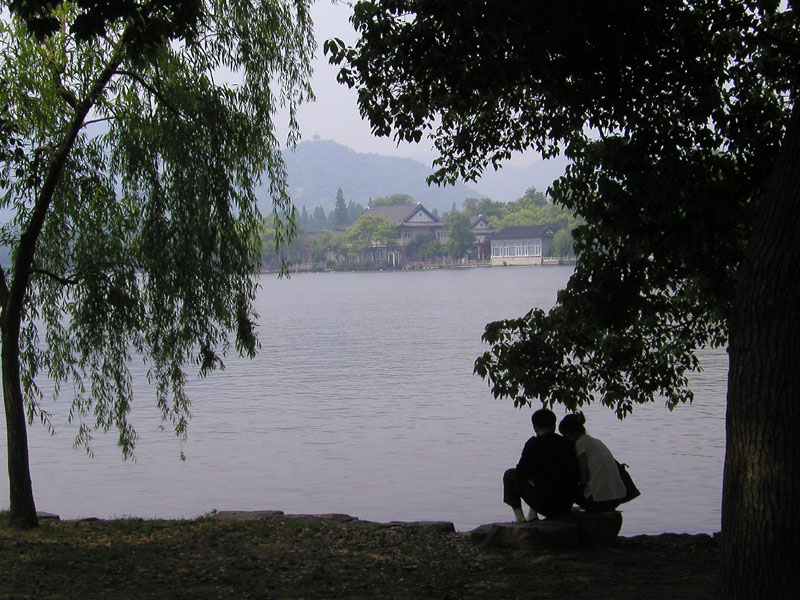
The famous lake is a short walk from the University.
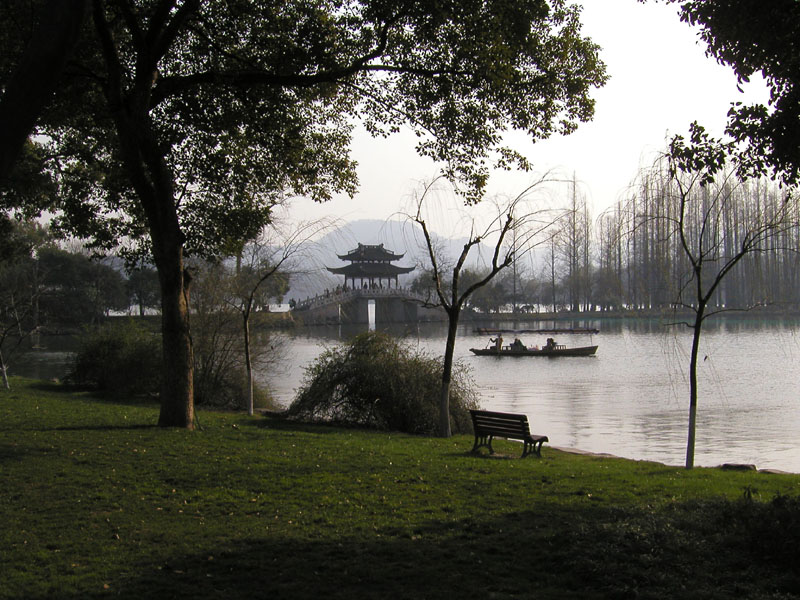
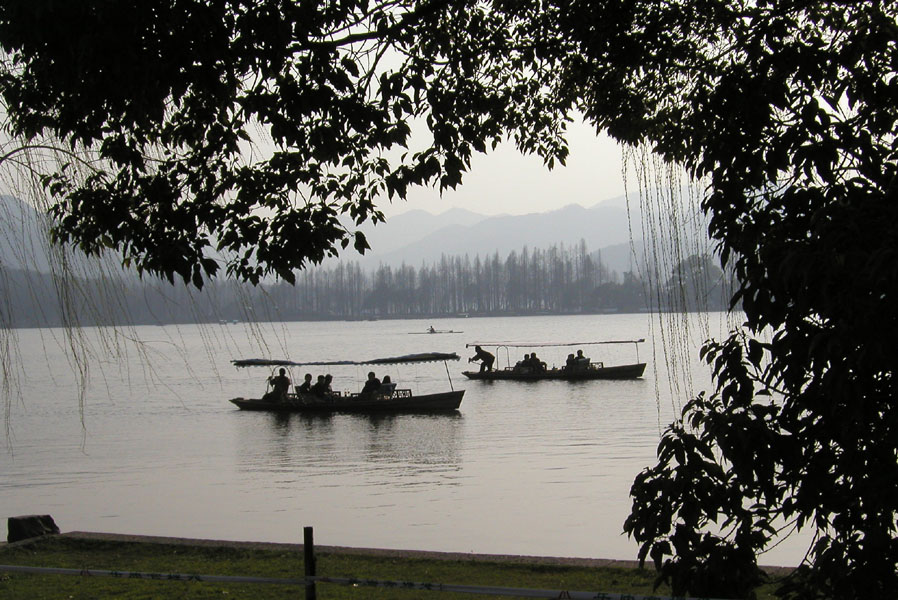
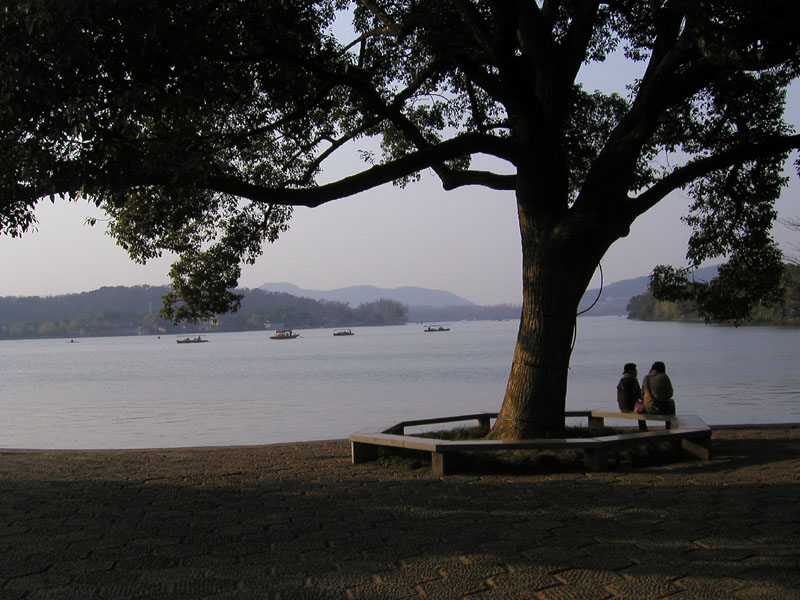
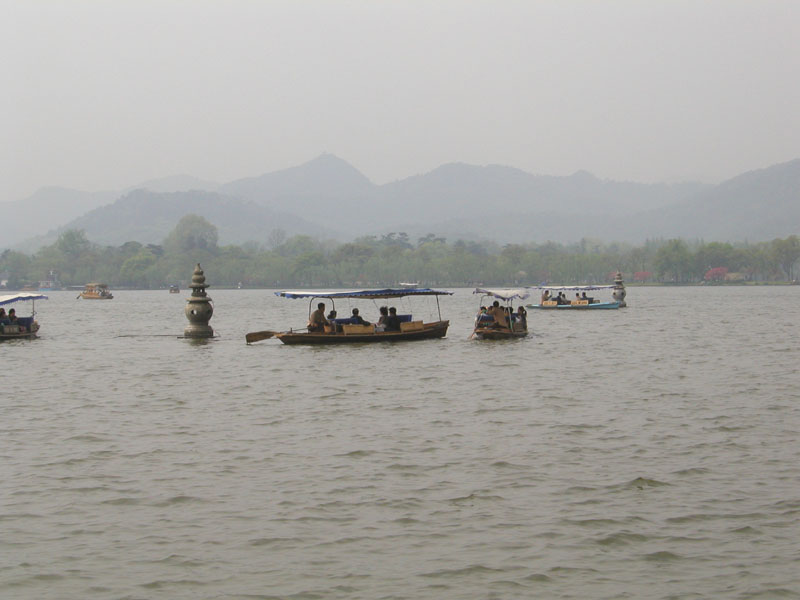
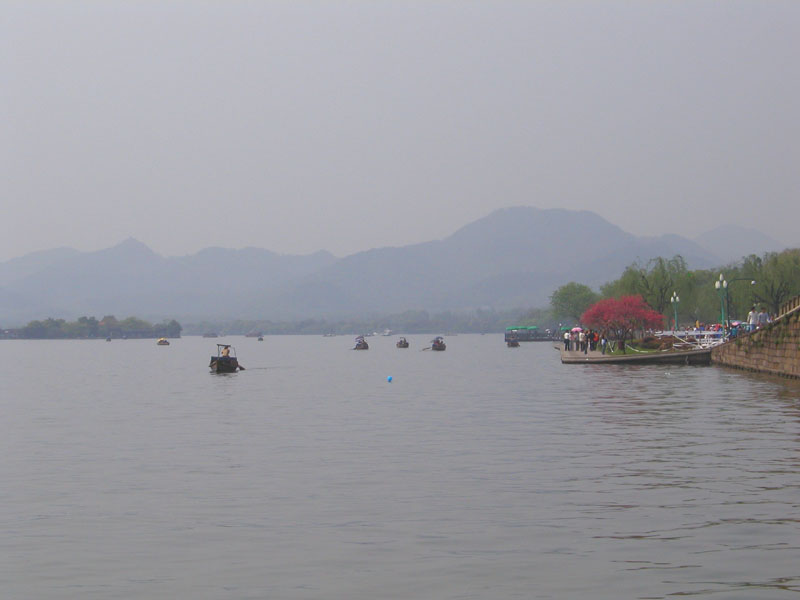
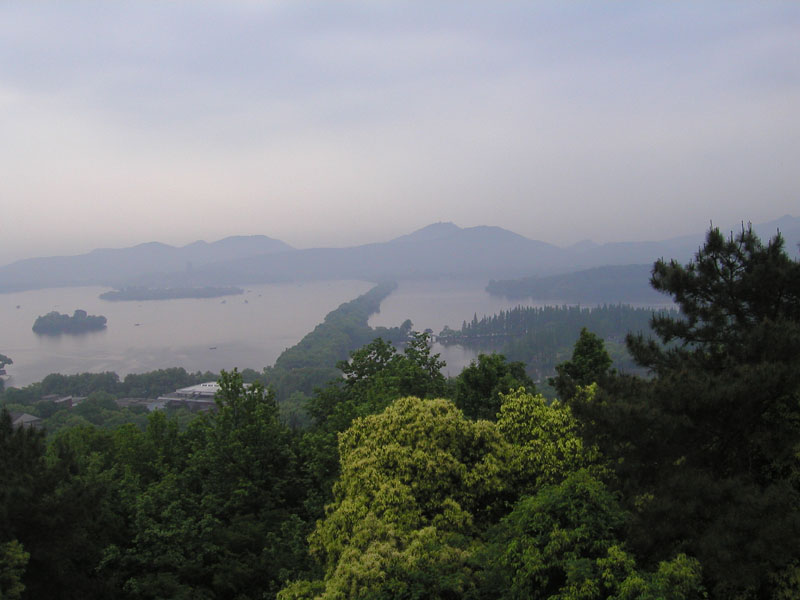
West Lake: before the willows had regained their leaves.West Lake: two boats are being rowed in traditional style with a single oar, while behind a rower is in a modern racing boat.West Lake.West Lake: one of the islands in the lake.West Lake: after the willows had regained their leaves.West Lake: taken from the famous Lesser Yingzhou Isle in the lake.West Lake: one of the Three Pools Mirroring the Moon on Lesser Yingzhou Isle.West Lake.West Lake.West Lake: the guest house on the lake, which was frequently visited by Mao Zedong.
Linyin Temple
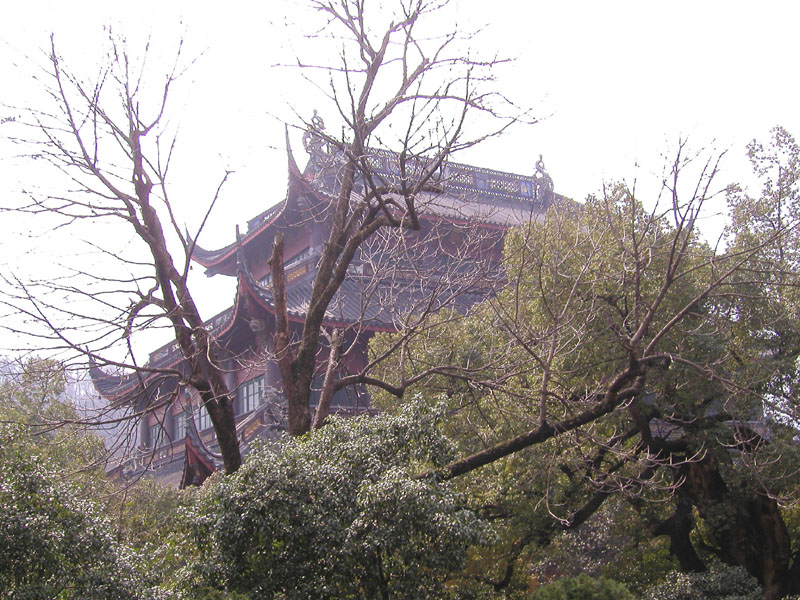
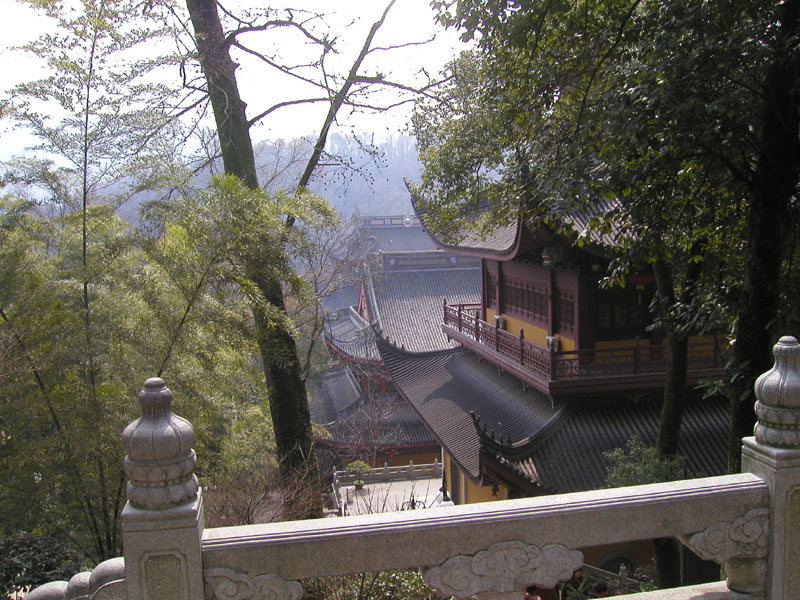
Lingyin Temple (Temple of the Soul’s Retreat): Dates from 326AD, but has been destroyed and
rebuilt 16 times. About 30 minutes walk from the University.
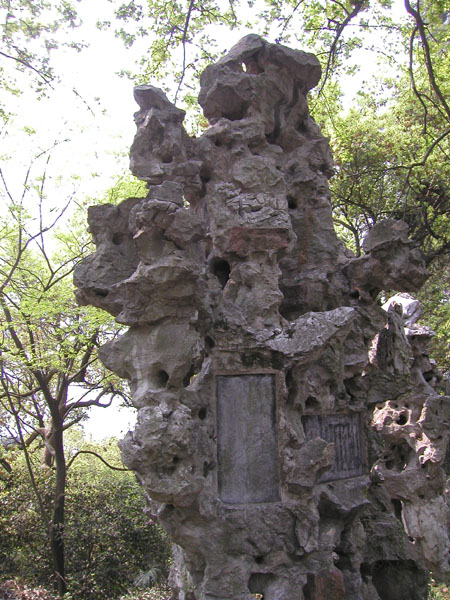
Lingyin Temple (Temple of the Soul's Retreat).Lingyin TempleLingyin TempleLingyin TempleLingyin TempleLingyin Temple: grotto on The Peak That Flew Here.Lingyin Temple: grotto on The Peak That Flew Here.Lingyin Temple: grotto on The Peak That Flew Here.Lingyin Temple.
North side of West Lake
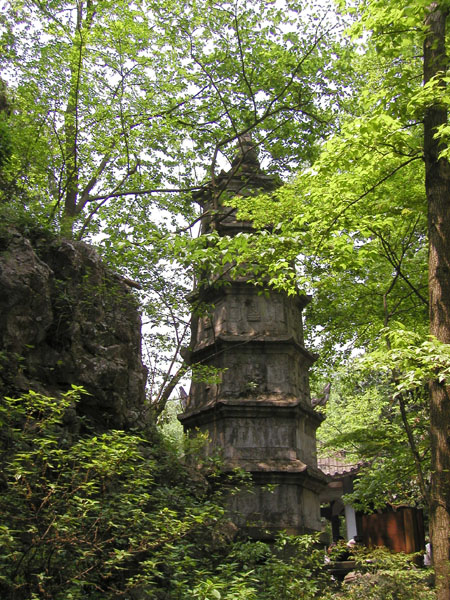
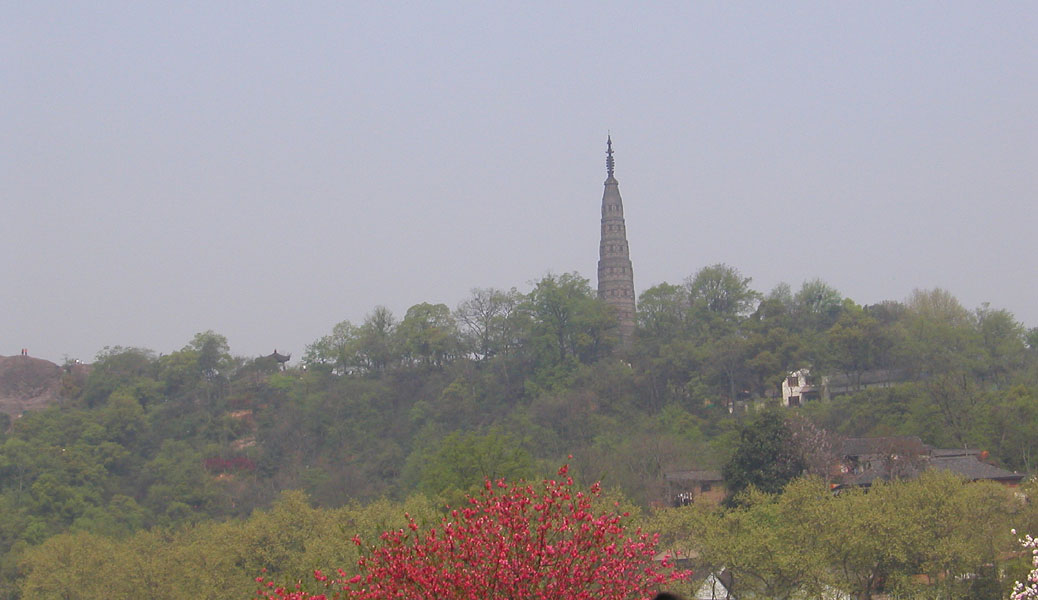
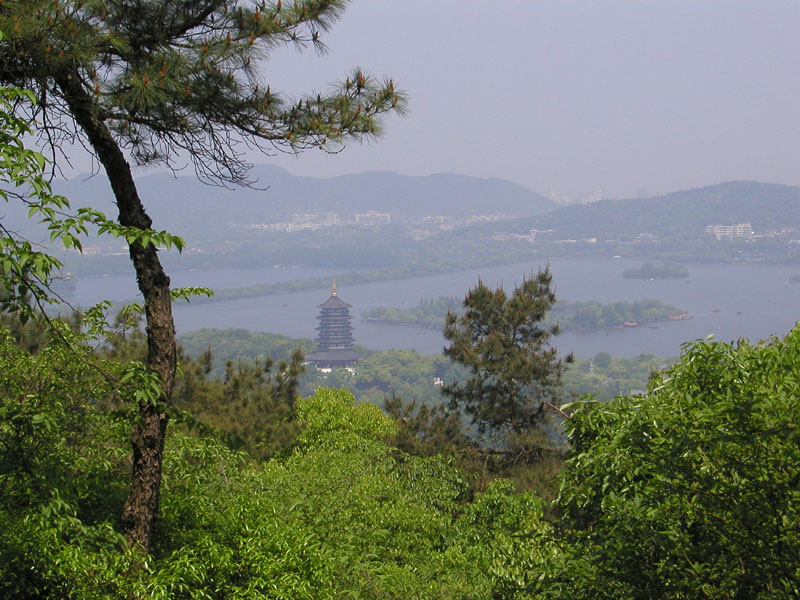
North Side (of West Lake): West Lake from Geling Peak.North Side: North inner lake in front; the main lake behind; Su causeway at right.North Side: the sign says "Good rock climbing! no artificial aids" (or maybe not). North Side: Baochu Pagoda.North Side: "Baochu Pagoda. This pagoda is said to have been
erected to bless the safe return of a prince.
Rebuilt in 1933, the present pagoda stands 45.3 meters, as a landmark of the West Lake.
It is likened to a slender, beautiful girl because of its elegant and smooth outline." (The Chinese side looks more interesting.)North Side: The Baochu pagoda from the Baidi causeway.North Side: Baochu competes with the Hangzhou skyline.North Side: view south from the Baidi causeway.North Side: returning via the Baidi causeway.North Side: returning via the Baidi causeway.North Side: West Lake from Xixia hill.North Side: grottos on XiXia Hill.
Yuhuangshan
This is the hill at the south side of the West Lake
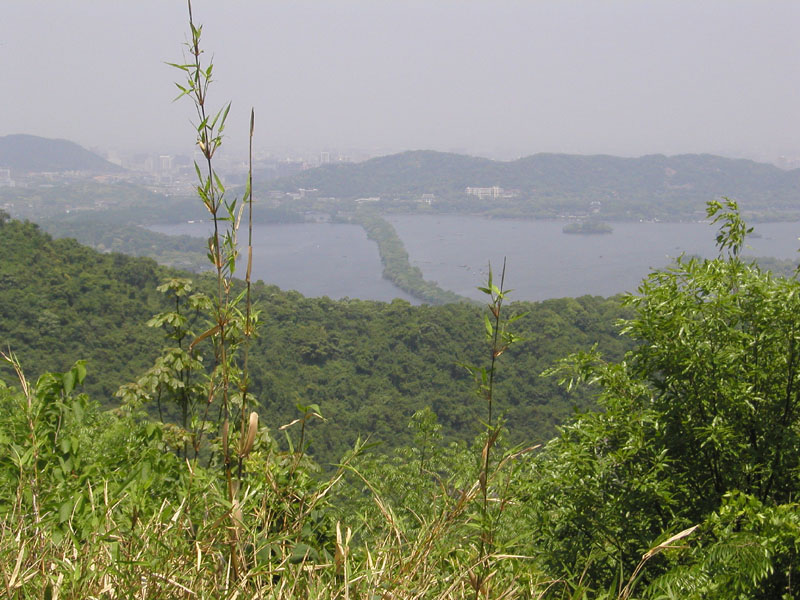
Yuhuangshan: the path up the hill.Yuhuangshan: at upper left is Zhejiang University and the hill behind it; at right is Geling peak.Yuhuangshan: the Su causeway.
Tea excursion
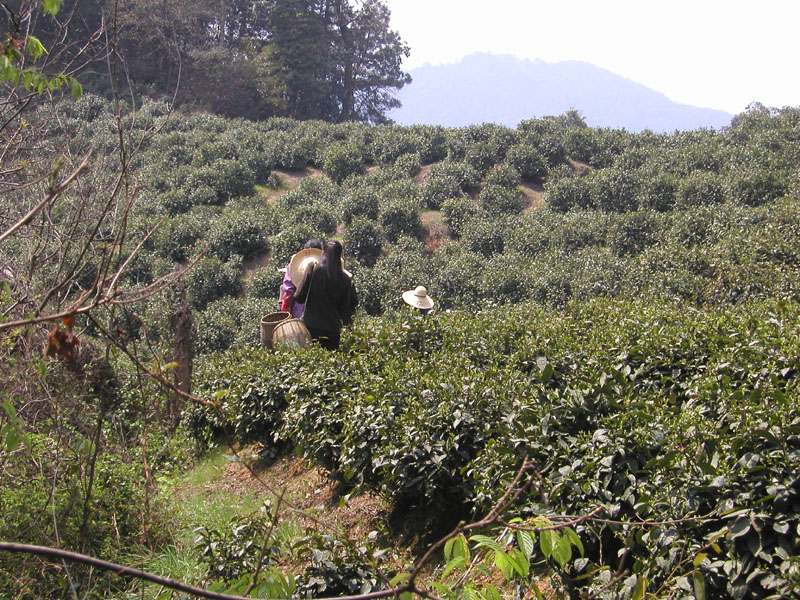
The tea fields are thousands of years old. Follow the path marked with a teapot through
tea fields down to the Dragon Well village. View the dragon at the bottom of the well.
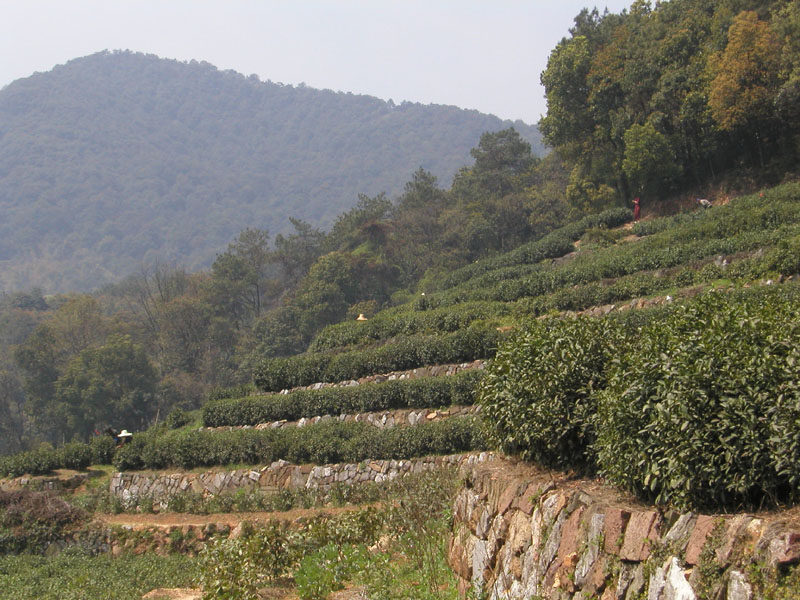
Tea excursion: the garden at the Tea Museum.Tea excursion: the tea fields behind the museum.Tea excursion: in the centre are the famous Longjing tea fields.Tea excursion: the famous Longjing tea fields.
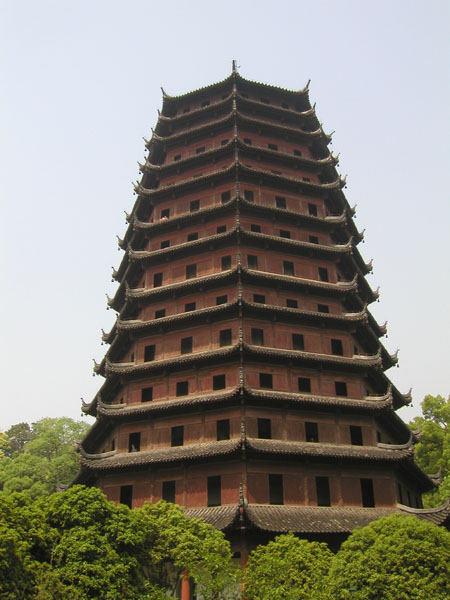
Liuhe (Six Harmonies) Pagoda.
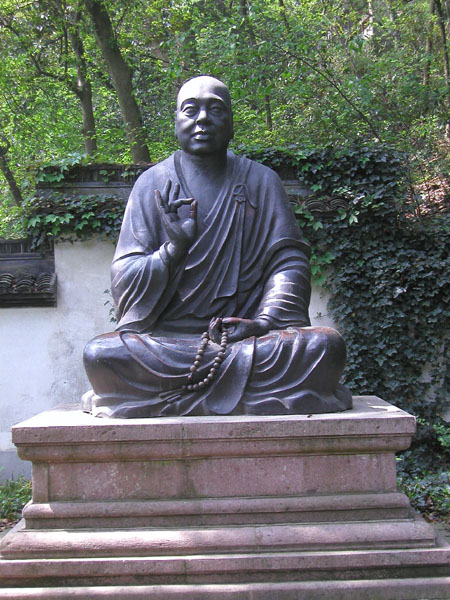
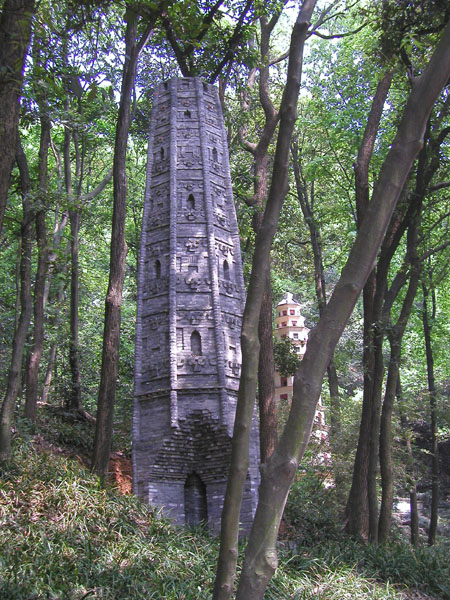
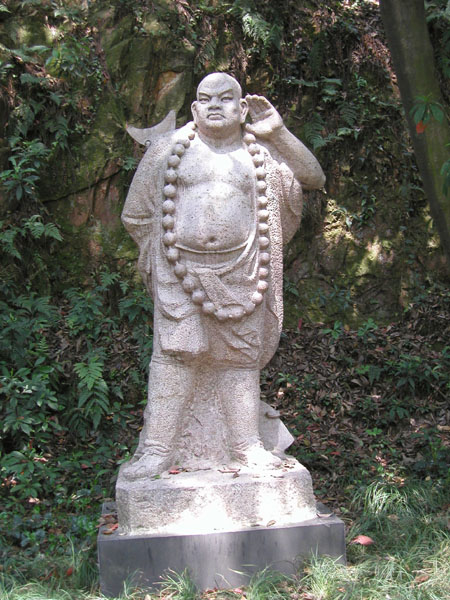
Liuhe (Six Harmonies) Pagoda.Liuhe Pagoda: "ZHI TAN. A Song dynasty Buddhist abbot of kaihu Temple, Liuhe (six harmonies) pagoda.
Liuhe pagoda was first built in 971, afterwards destroyed in the war. By the southern song dynasty, ZHI TAN made up his mind to rebuild the pagoda, being alms, raising funds and enduring all kinds of hardship. In 1153, the pagoda was rebuilt and completed in 1163.
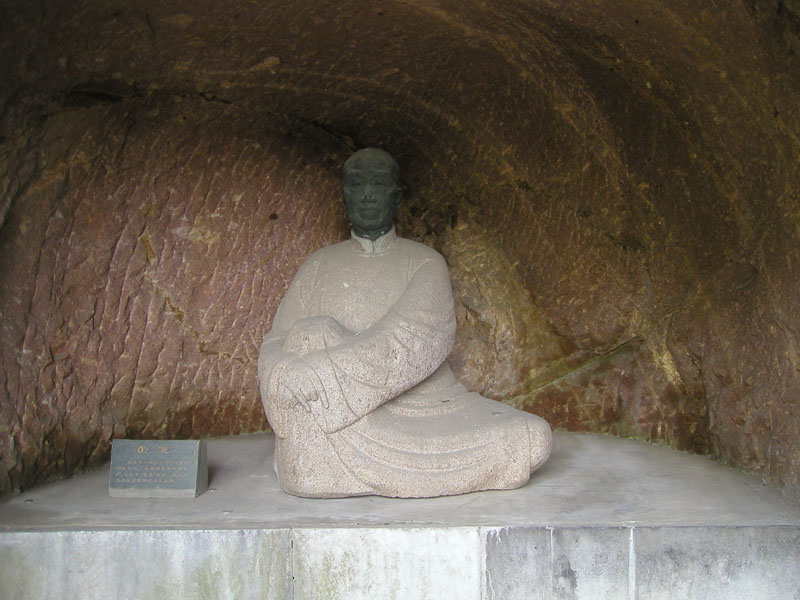
Now you can still enjoy the unique architecture of the pagoda of some 800 years ago. In commemoration of ZHI TAN's boundless beneficence the bronze statue for him is founded here in May 1995.
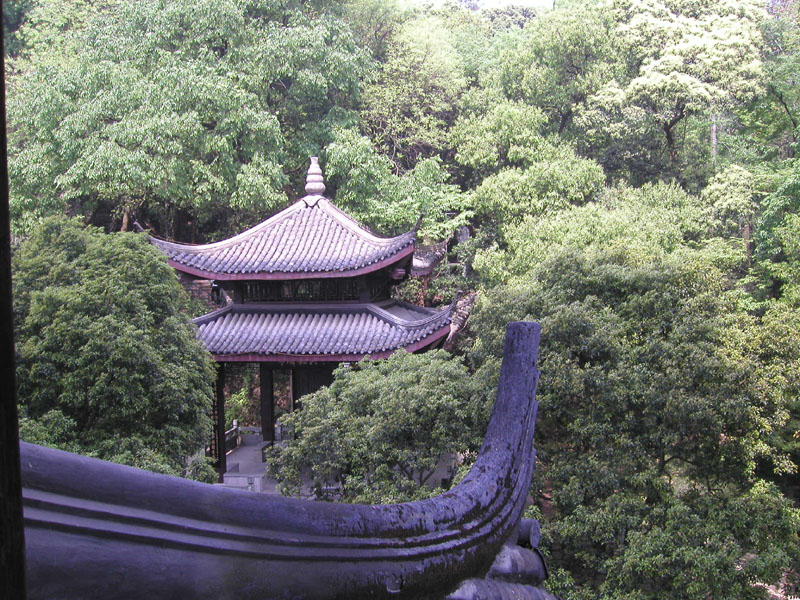
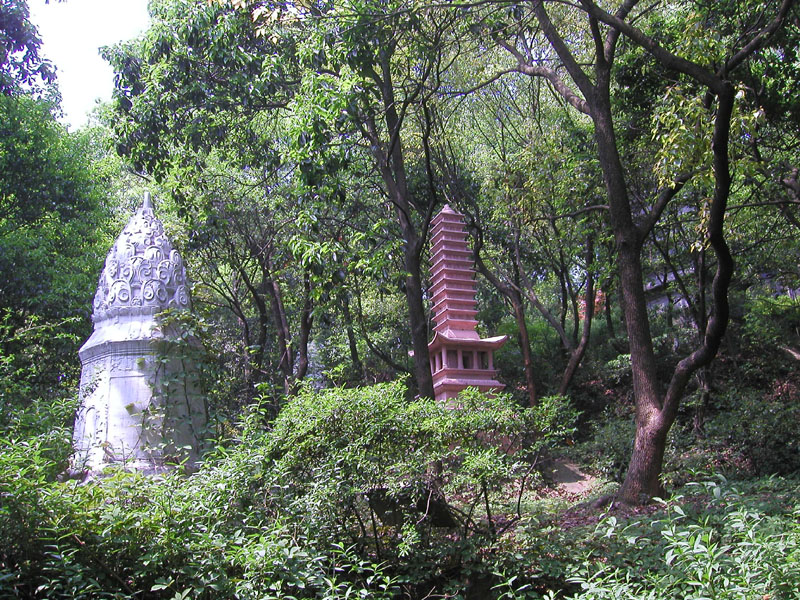
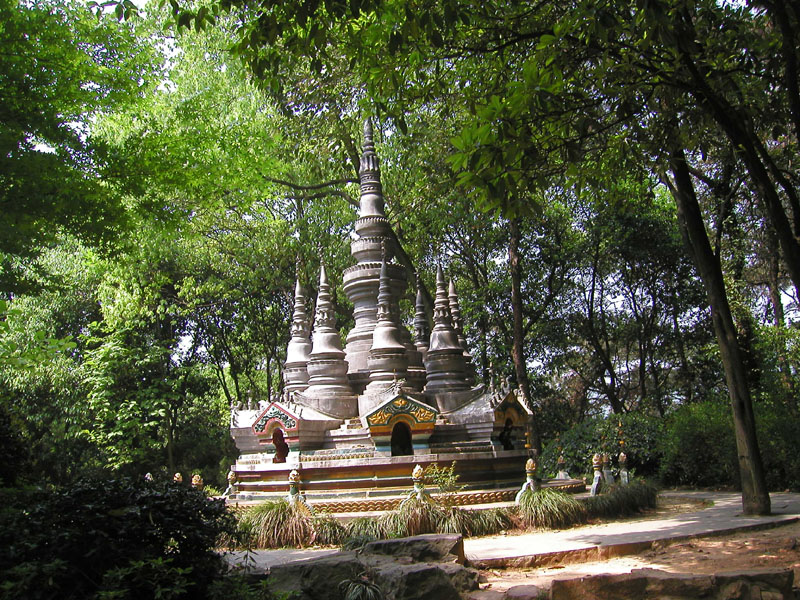
Liuhe pagoda: Zhi Tan.Liuhe Pagoda: view from the pagoda.Liuhe Pagoda: some of the miniature copies of other famous Chinese
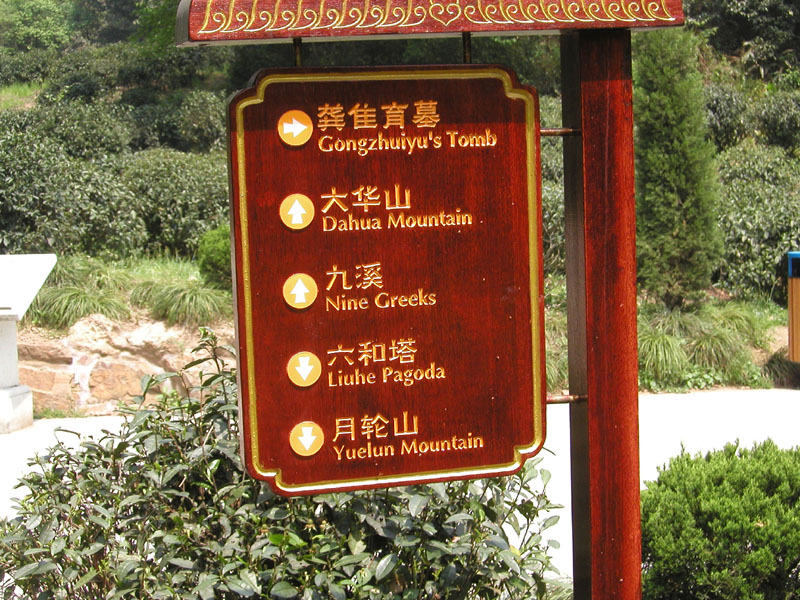
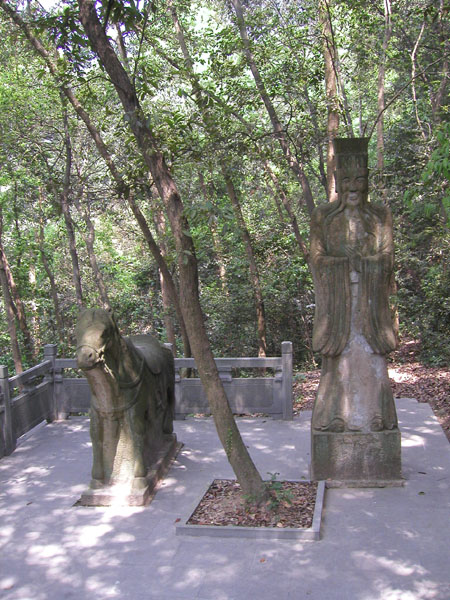
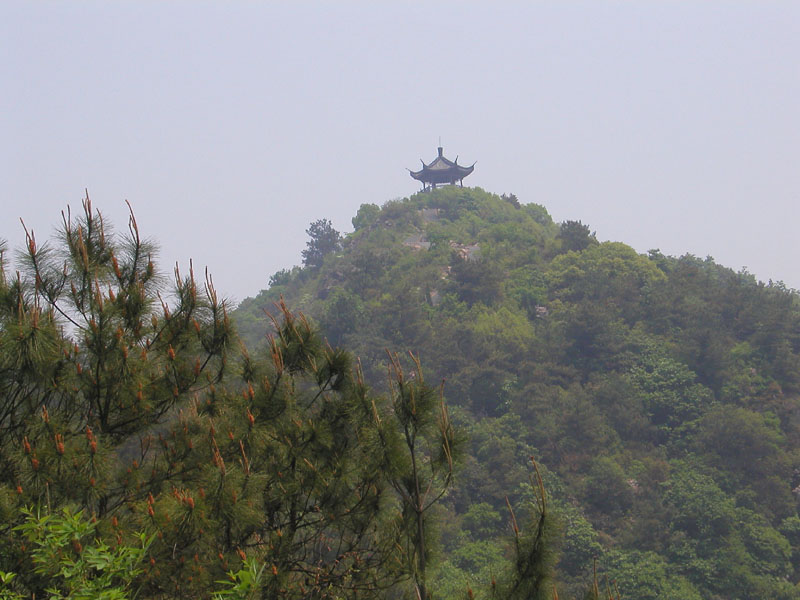
pagodas.Liuhe Pagoda: some of the miniature copies of other famous Chinese pagodas.Liuhe Pagoda: some of the miniature copies of other famous Chinese pagodas.Liuhe Pagoda.Liuhe Pagoda: so I dutifully visited the Tomb and climbed the Mountain (the Nine Greeks remained a mystery).Liuhe Pagoda: Gongzhuiyu's Tomb.Liuhe Pagoda: on the way to Dahua Mountain. (The character "shan" at top right is the only one you need to know while hiking in China. It means "mountain" or "peak". Whenever you come to a fork in the trail, you follow the shan.)Liuhe Pagoda: on the walk above the pagoda.
Tiger Spring: "Dreaming of the Tiger Spring at Hupao."
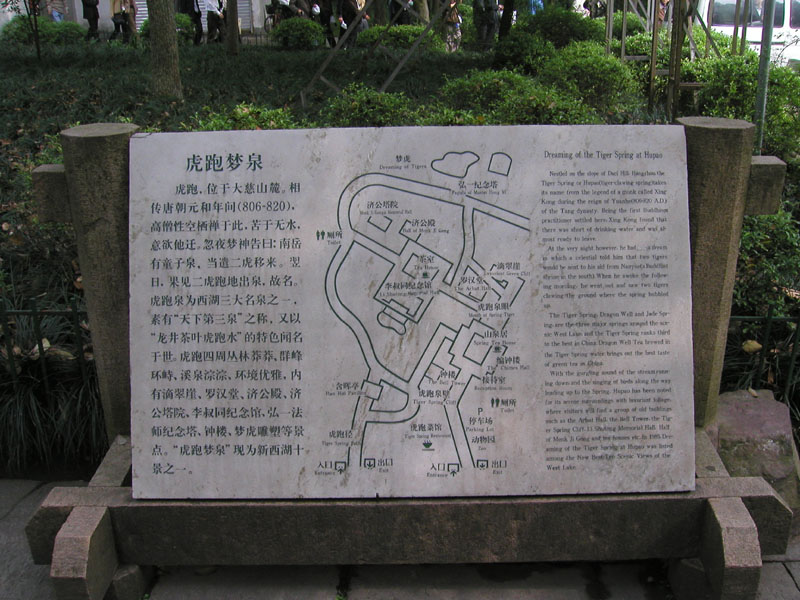
Tiger Spring: "Dreaming of the Tiger Spring at Hupao.
Nestled on the slope of Daci Hill, Hangzhou, the Tiger Spring or Hupao (tiger-clawing spring) takes its name from the legend of a monk called Xing Kong during the reign of Yuanhe (806-820 A.D.) of the Tang dynasty. Being the first Buddhism practitioner settled here, Xing Kong found that there was short of drinking water and was almost ready to leave.
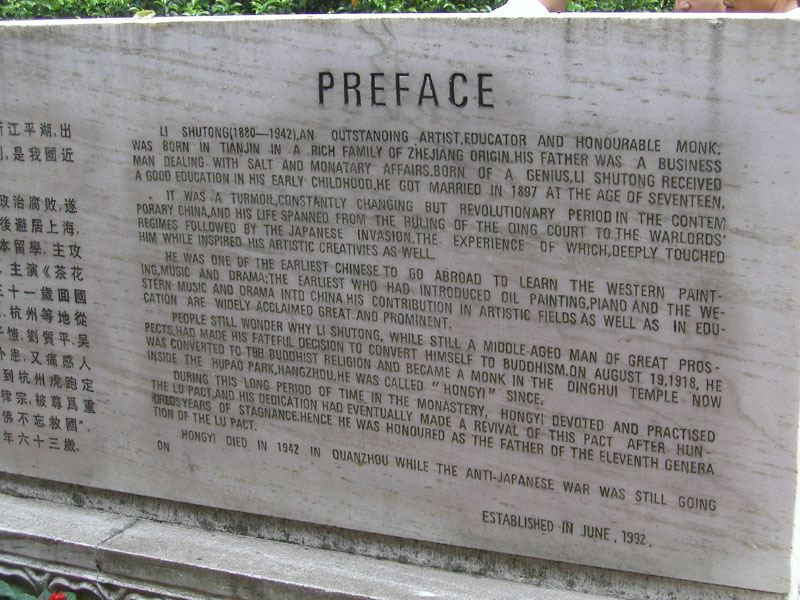
At the very night however, he had a dream in which a celestial told him that two tigers would be sent to his aid from Nanyue (a Buddhist shrine in the south). When he awoke the following morning, he went out and saw two tigers clawing the ground where the spring bubbled up..."Tiger Spring.Tiger Spring.Tiger Spring: "Li Shutong (1880-1942, an outstanding artist, educator and honourable monk...
He was one of the earliest Chinese to go abroad to learn the Western painting, music and drama; the earliest who had introduced oil painting, piano and the Western music and drama into China. His contribution in artistic fields as well as in education are widely acclaimed great and prominent.
People still wonder why Li Shutong, while still a middle-aged man of great prospects, had made his fateful decision to convert himself to Buddhism. On August 19, 1918, he was converted to the Buddhist religion and became a monk in the Dinghui temple, now inside teh Hupao Park, Hangzhou. He was called `Hongyi' since...
Hongyi died in 1942 in Quanzhou while the anti-Japanese war was still going on."Tiger Spring.Tiger Spring: on the walk home across the hills, I passed this restaurant.
Hefang Street
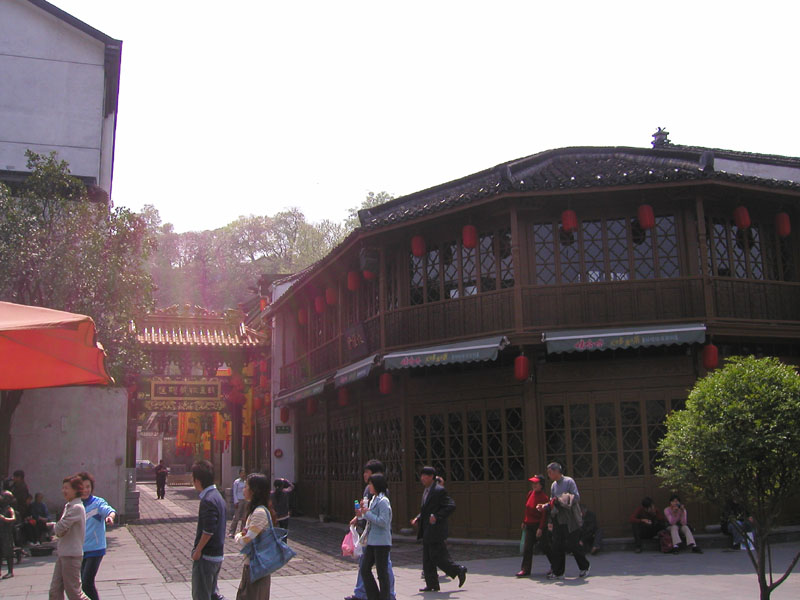
When Hangzhou was rebuilt, the entire beautiful old city was destroyed, but then a small part of it was recreated (for the tourists).
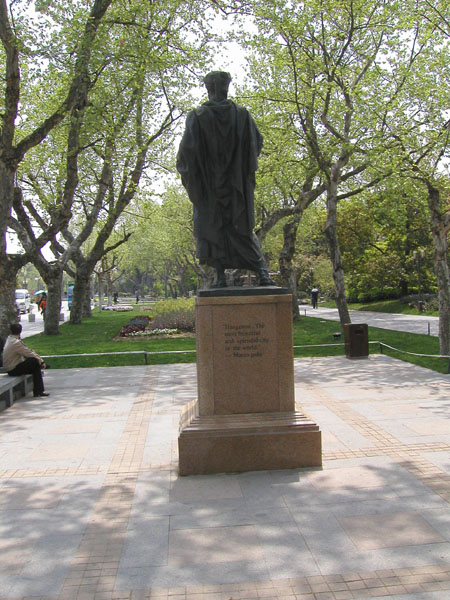
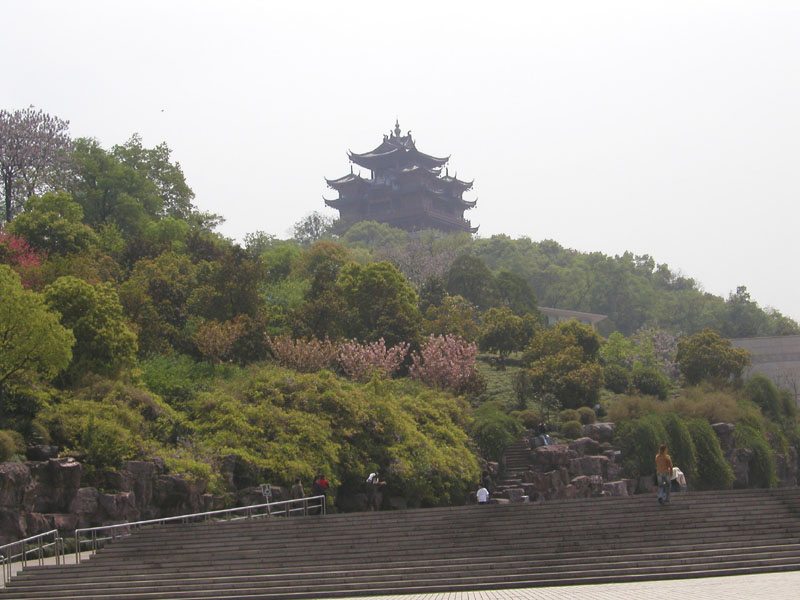
A statue of Marco Polo with his quote: "Hangzhou, the most beautiful and splendid city of the world" (in Chinese on the front and English on the back).Hefang street, reconstructed to look as it did a few centuries ago.A pagoda near Hefang street.
Huang Shan (Yellow Mountain)
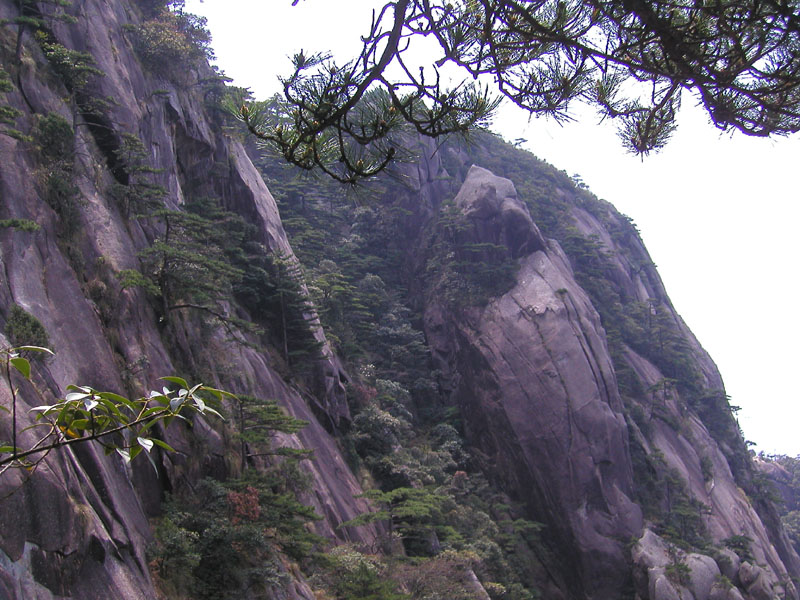
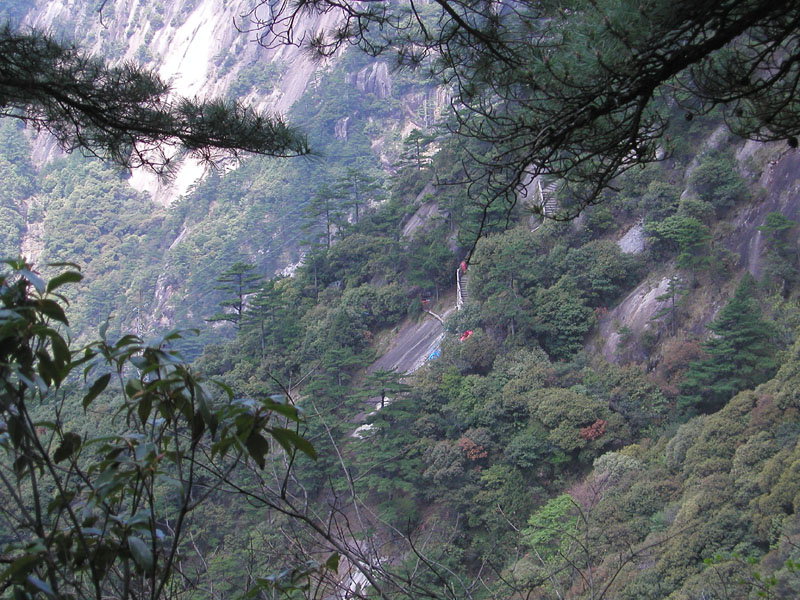
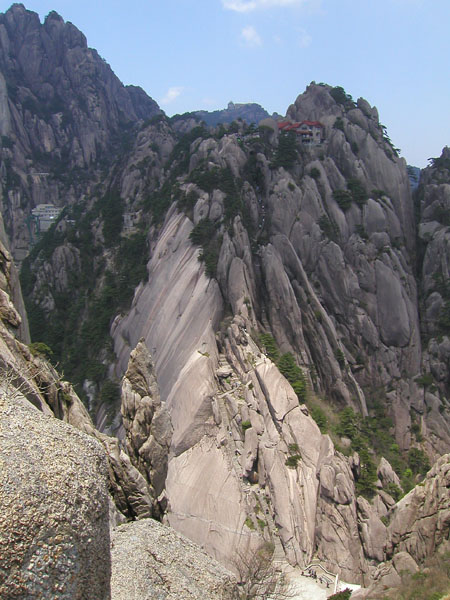
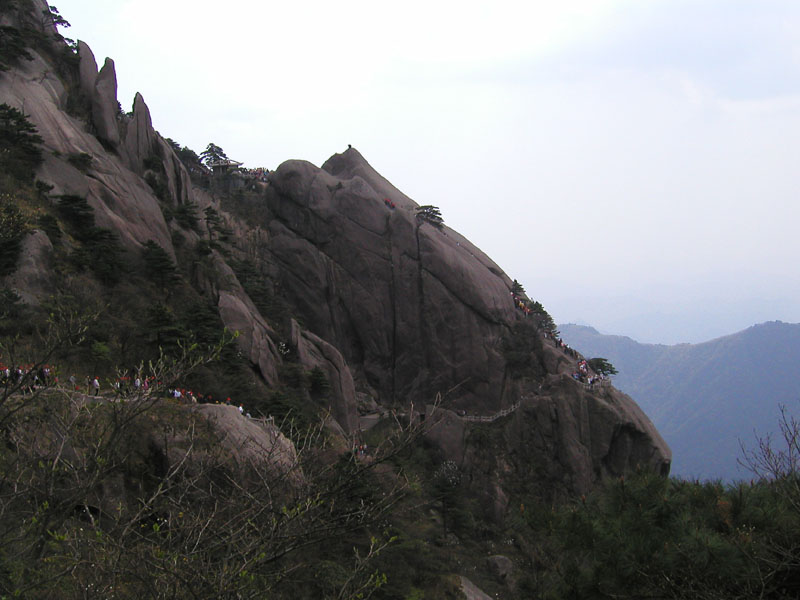
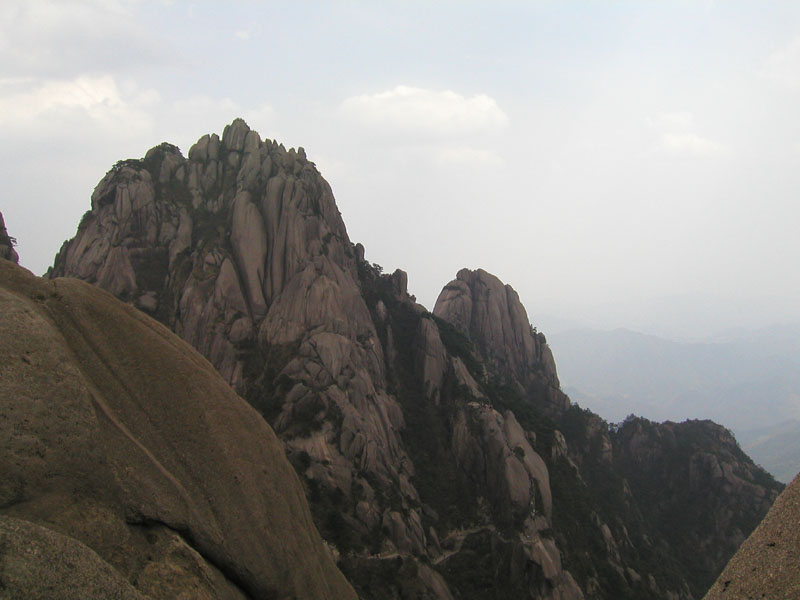
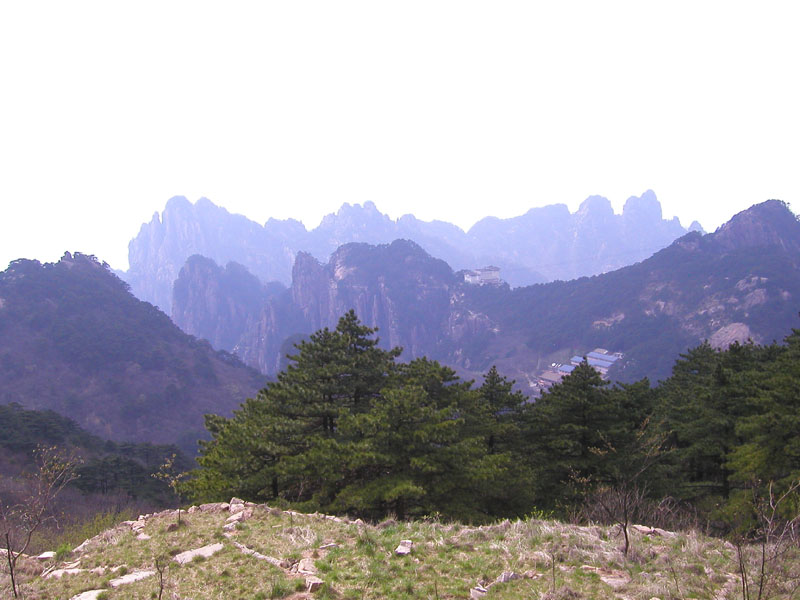
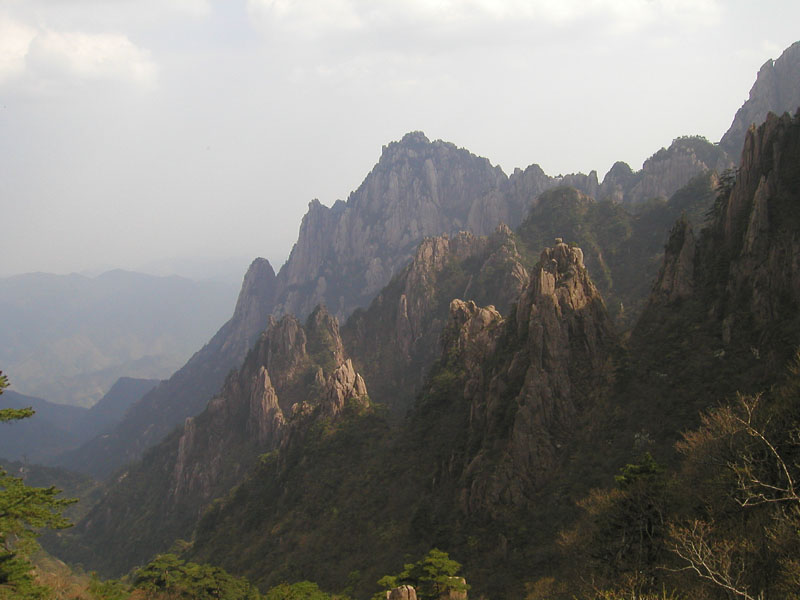
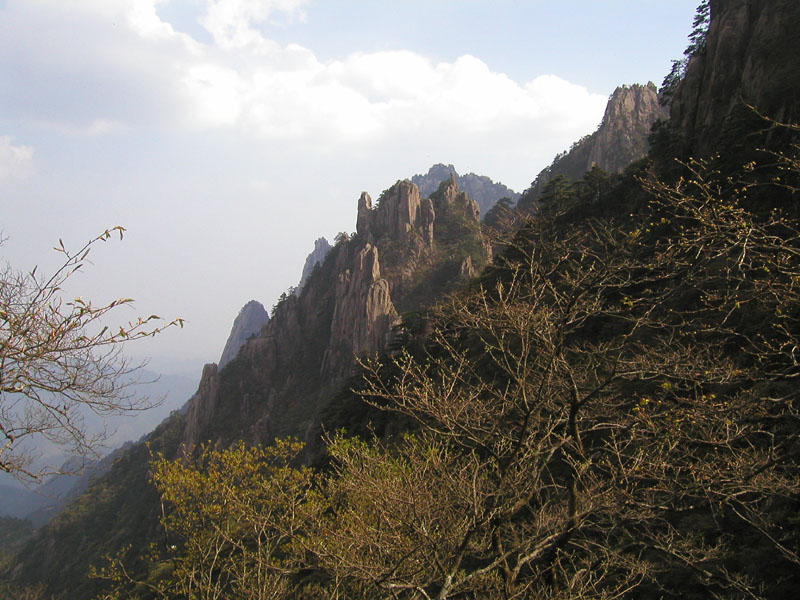
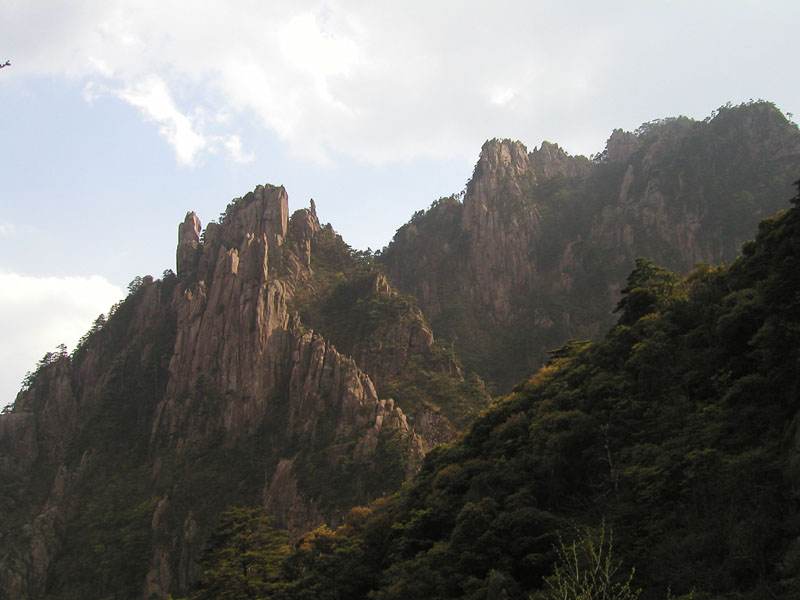
Huang Shan (Yellow Mountain): Officially, this is one of the five most beautiful mountain areas in China, but everyone knows that if you see it, there is no need to see the others because it is the most beautiful of the five. The light is best in the early morning and late evening, and so you should spend a night up high. However, by the time I discovered that it was less than four hours drive from Hangzhou, I could manage only one day. So I climbed the Western Steps, traversed all the peaks I could find (following the shan), and descended the Eastern Steps. There are stone steps that allow you to go places that would otherwise require serious climbing.
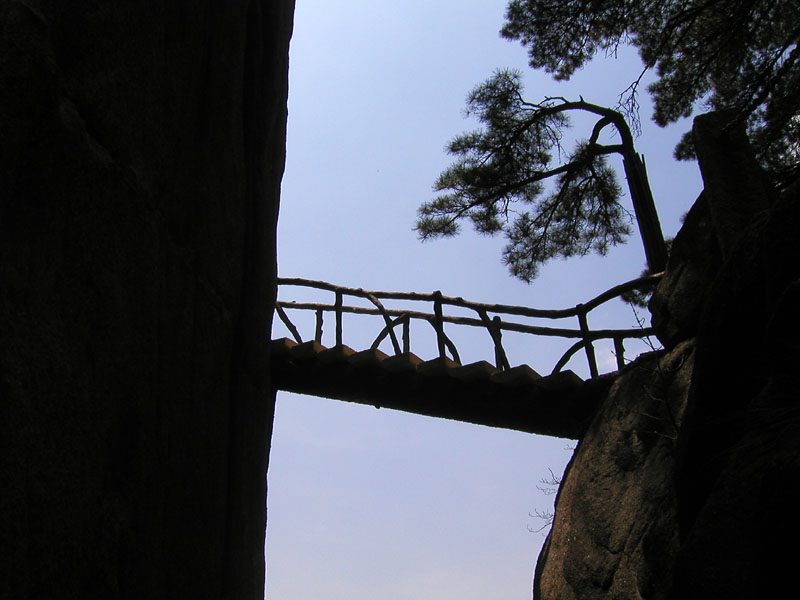
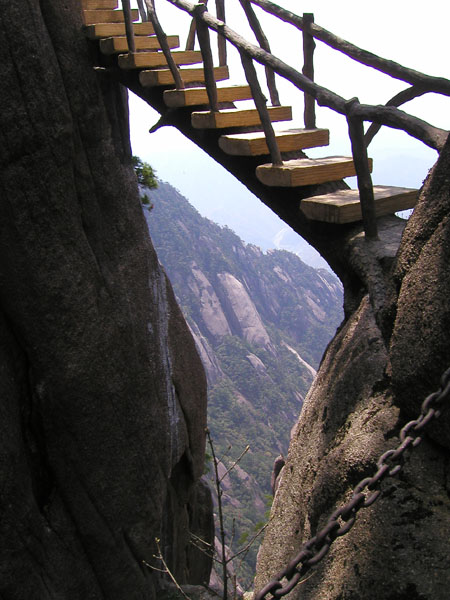
Most people take the cable car. The photo is from the path that traverses Heavenly Capital Peak and shows the usual path.In places the path became quite airy.One had to hope the railings were stronger than they looked.The path from the western steps to the eastern steps; Lotus Flower Peak.People on the path between the top of the Eastern Steps and the top of the Western Steps.A more distant view of the same scene.Huang ShanThe descent of the Eastern Steps was the most pleasant part of the day: there were few people, and the light was perfect.
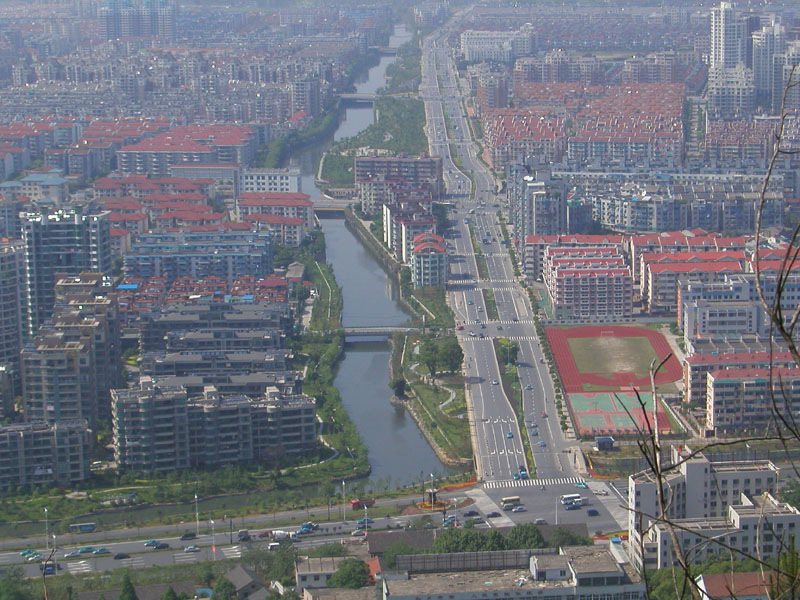
At top-right is the gap bridged by steps shown in an earlier photograph.Descent of the Eastern Steps.Descent of the Eastern Steps.Before I left, I took this picture of Hangzhou from the hill behind the University.
In Hangzhou, you can still see the Grand Canal that once "meandered almost 1800km from Beijing to Hangzhou," but this is not it.